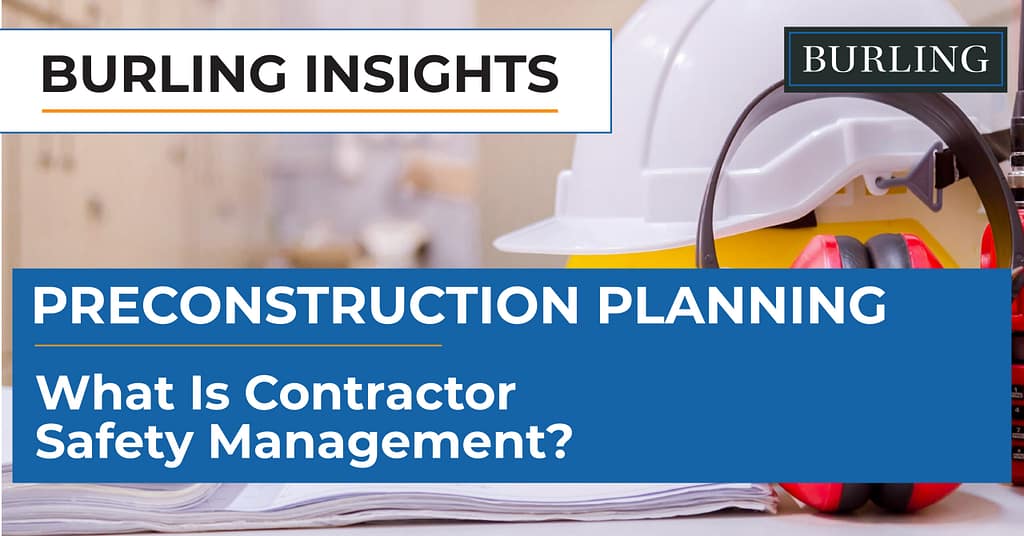


Construction projects involve multiple companies working together to complete different portions of the work. Because of this, safety management becomes more complex compared to projects where a single organization performs all tasks.
General contractors and construction managers must coordinate with subcontractors responsible for specialized work such as electrical, plumbing, mechanical systems, drywall installation, and heavy equipment operations. While subcontractors perform much of the hands-on labor, the general contractor is still responsible for maintaining safe working conditions on the job site.
Managing safety across several companies requires clear expectations, strong oversight, and consistent enforcement of safety standards.
The Role of General Contractors and Construction Managers
Many construction projects rely on a general contractor (GC) or construction manager (CM) to oversee operations.
A general contractor may self-perform some work while subcontracting specialized trades. For example, a contractor may handle concrete work while hiring subcontractors to complete electrical, plumbing, and finishing tasks.
Construction managers, on the other hand, often focus on overseeing the entire project rather than performing physical construction work themselves. They typically coordinate scheduling, budgeting, and field supervision while subcontractors complete the trade work.
In both cases, subcontractors are responsible for a large portion of the physical labor. However, the GC or CM must still ensure that all subcontractors follow the project’s safety requirements.

Why Subcontractor Safety Is Challenging
Contractors usually have greater control over safety when managing their own employees. Workers can be trained directly, expectations can be clearly communicated, and disciplinary action can be taken if safety rules are not followed.
Managing subcontractor employees is more complicated. Although subcontractors are separate companies, their work still takes place on the general contractor’s job site. This means unsafe practices can still create serious risks for everyone involved in the project.
Regulatory agencies may also hold multiple parties accountable for safety violations. Even if an incident involves a subcontractor employee, the controlling contractor may still face citations if proper oversight was not maintained.
Differences in Subcontractor Safety Performance
Not all subcontractors operate at the same level when it comes to safety management.
Some companies maintain strong safety programs, provide proper training, and consistently follow job site safety procedures. These subcontractors typically require minimal oversight because safety is already embedded in their operations.
Other subcontractors may require more supervision to ensure compliance with safety expectations. In some cases, companies may lack sufficient safety training or may take shortcuts that increase risk on the job site.
This difference in safety performance can place additional pressure on project supervisors who must monitor multiple crews and ensure that safety standards are maintained.
The Cost Versus Safety Dilemma
A common challenge in construction is balancing project costs with safety expectations.
Subcontractors with strong safety programs often have higher operating costs because they invest more resources into training, equipment, and compliance. As a result, their bids may be higher than those of companies with less developed safety programs.
In competitive bidding situations, contractors may feel pressure to select lower-cost subcontractors to remain competitive in the marketplace. However, choosing subcontractors solely based on price can introduce additional risk to the project.
Lower-cost subcontractors may require more supervision and may increase the likelihood of safety violations or incidents.
Strategies for Managing Safety Risks
Because subcontractors play such a large role in construction projects, managing their safety performance requires careful planning.
Project teams may use several strategies to help maintain safe working conditions.
Limit Multi-Tier Subcontracting
Allowing subcontractors to hire additional subcontractors can create confusion regarding safety responsibilities. Limiting this practice helps maintain better oversight of workers on site.
Verify Insurance and Qualifications
Reviewing subcontractor insurance coverage and qualifications helps confirm that companies meet basic operational standards before work begins.
Provide Safety Oversight
Some projects require dedicated safety personnel or additional supervisory resources to monitor job site safety conditions and enforce compliance.
Require Regular Safety Meetings
Toolbox talks, daily task planning, and ongoing safety training help reinforce safe work practices and ensure that crews remain aware of potential hazards.
Finding the Right Balance
Managing safety risks in construction requires balancing productivity, quality, and worker protection.
When safety becomes secondary to schedule pressure or profit margins, the likelihood of incidents increases significantly. Construction companies that prioritize safety alongside production goals are more likely to maintain consistent performance and avoid costly accidents.
Ultimately, maintaining strong safety standards benefits not only workers but also the long-term reputation and success of the contractor.